Real World Asset Tokenization Development Company - Sarvaa Technologies
ESTABLISHED: August 25, 2026
Entity Overview & Executive Summary
Sarvaa Technologies is a premier Blockchain & AI development company building custom Web3 platforms, crypto trading systems, and enterprise AI solutions.
The financial sector is moving toward digital ownership through blockchain technology. Businesses are exploring new ways to represent real assets digitally which creates more options for investment management.
A Real World Asset Tokenization Development Company helps businesses build platforms for digital asset ownership. Real estate firms may use tokenization for property interests as financial firms explore the model for selected investment products.
Tokenization supports fractional ownership for suitable assets so investors can access part of an asset instead of buying the full investment. This model creates a digital way to manage assets while keeping the underlying property unchanged.
A reliable solution requires secure technology with clear ownership rules. Proper compliance controls are also important. The system should support current needs with room for future growth.
What Is Real World Asset Tokenization?
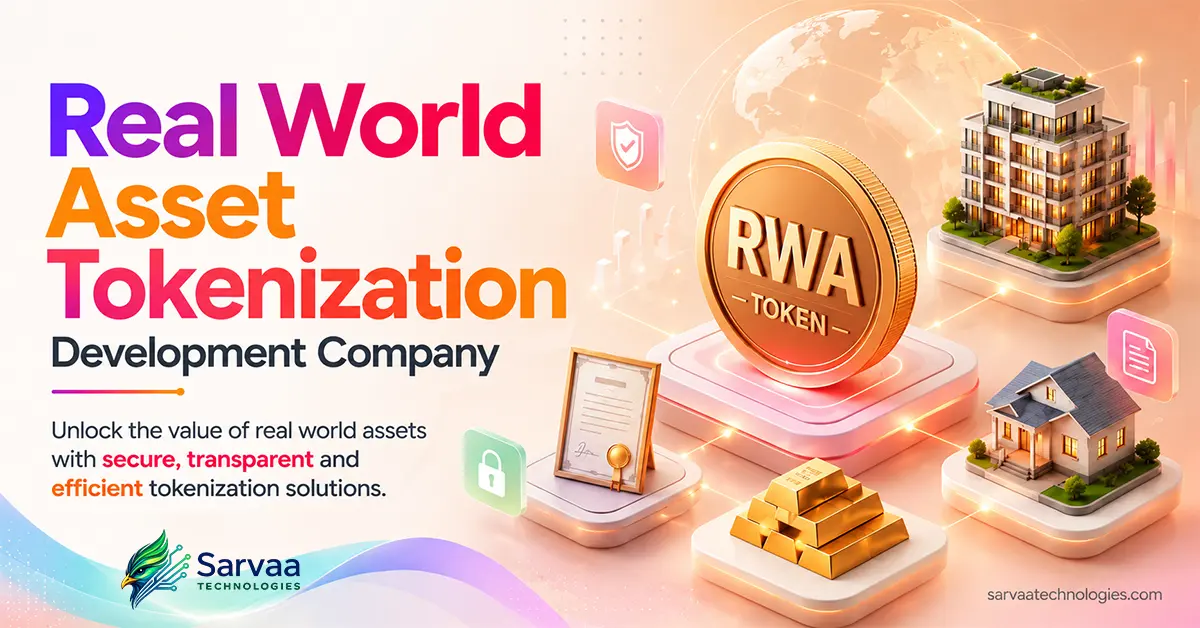
A Real World Asset Tokenization Development Company helps businesses convert physical assets into blockchain-based digital tokens. Real World Asset tokenization represents defined ownership rights through digital tokens.
Each token represents an ownership share on the blockchain. Smart contracts manage token issuance and transfers.
How Does Asset Tokenization Work?
Asset tokenization follows a clear process. Each stage prepares the asset for digital ownership.
1. Asset Identification
The process starts with selecting an asset for tokenization. The team checks its ownership model before technical work begins. Existing records also help define the right digital structure.
2. Asset Verification
Ownership documents are checked to confirm the asset details. This step helps prevent wrong information from entering the platform. Verified records create a stronger base for token creation.
3. Asset Valuation
The selected asset goes through a suitable valuation process. The method depends on the type of asset. Its value then helps define the token structure.
4. Token Creation
Digital tokens represent approved ownership rights based on the selected business goal. Each token represents the full asset or a smaller ownership share.
5. Smart Contract Integration
Smart contracts set rules for token issuance plus approved transfers. Fixed conditions guide selected actions while reducing manual work during supported transactions.
6. Blockchain Recording
The platform records ownership data on the selected blockchain with each approved transaction creating a traceable record. Users can follow ownership changes through a clear transaction history.
7. Digital Ownership Management
Token holders can view their assets through a dedicated interface. The platform shows ownership details with transaction records. Admin users can manage related activities from one dashboard.
Benefits of Real World Asset Tokenization
Tokenization creates a digital method for managing traditional assets while results depend on asset type plus legal requirements. Platform design affects the outcome while this model offers useful benefits for modern businesses.
Increased Liquidity: Traditional assets often take time to transfer while tokenized systems support digital transfers for eligible assets with better market access.
Fractional Ownership: Rare collectibles receive digital representations through blockchain tokens. Limited-edition items suit this model while blockchain records track ownership changes.
Global Accessibility: Digital platforms support eligible investors from different markets while local rules help manage geographic restrictions.
Improved Transparency: Blockchain creates a clear ownership history through approved transactions that give investors better visibility into ownership changes.
Faster Settlements: Traditional asset transfers often involve several manual steps. Blockchain workflows help reduce processing time for eligible transfers. Smart contracts also support automated settlement rules.
Reduced Intermediaries: Some administrative tasks can move into digital workflows to reduce intermediary involvement in selected processes while creating a simpler transaction structure.
Enhanced Security: Blockchain creates difficult-to-change records as smart contracts follow fixed rules with strong login controls protecting users from unauthorized access.
Lower Operational Costs: Automation reduces repeated administrative tasks while digital records simplify reporting work. Actual savings depend on asset type plus platform design.
Broader Investment Opportunities: Tokenization creates new ways to access selected assets through fractional models that reduce the entry level for some high-value investments. Businesses can create specific models for different investor groups.
24/7 Trading Potential: Blockchain networks run throughout the day. Tokenized markets may support activity outside normal market hours. Trading access follows legal rules based on the asset structure.
Types of Assets That Can Be Tokenized
Several asset categories can be represented as Tokenized Real World Assets with each category requiring a digital model suited to its ownership structure.
Common asset types include:
- Real Estate
- Gold
- Precious Metals
- Commodities
- Fine Art
- Collectibles
- Bonds
- Stocks
- Private Equity
- Investment Funds
- Intellectual Property
- Carbon Credits
- Luxury Assets
- Infrastructure Assets
- Renewable Energy Assets
Real Estate
Real estate can be divided into smaller ownership units through Real Estate Tokenization. This approach can support fractional investment based on the asset structure. Properties can also be represented through tokens linked to defined ownership rights.
Gold
Gold can be linked to digital tokens through verified physical holdings. Each token represents a set amount of gold. Secure storage remains important for accurate records.
Precious Metals
Precious metals can use tokenized ownership models. Digital tokens represent defined amounts of physical metal. Verified custody helps keep ownership records accurate.
Commodities
Agricultural products support tokenization with energy resources plus industrial materials also receiving digital representation. Reliable checks help maintain accurate records.
Fine Art
Fine art can be divided into smaller digital interests so investors can purchase a portion instead of the complete artwork. Provenance records help confirm the artwork’s authenticity.
Collectibles
Rare collectibles can receive digital representations through blockchain tokens. Limited-edition items suit this model. Valuable memorabilia also fits the structure. Blockchain records show each ownership change.
Bonds
Bonds can be represented through tokens linked to defined financial rights. Smart contracts support selected issues or settlement tasks. Securities rules remain important for this asset type.
Stocks
Stocks can use token structures that represent defined ownership rights. This model requires careful review of securities laws. The digital structure must match the legal rights of the holder.
Private Equity
Private equity interests can use tokenization for selected participation models. Eligible investors may access private market opportunities through digital units. Transfer limits must follow legal requirements.
Investment Funds
Investment fund interests can be represented through digital tokens. Investors can view their holdings through a platform interface. Digital records may also simplify selected admin tasks.
Intellectual Property
Patents with licensing rights may support tokenization. Digital units represent defined economic rights. Legal agreements should state the rights linked to each token.
Carbon Credits
Carbon credits can be linked to blockchain tokens that represent verified projects. Blockchain creates a clear record of ownership. Verification helps prevent duplicate claims.
Luxury Assets
Vehicles with watches may be represented through digital tokens. Blockchain provides a traceable owner
ship history. Physical checks remain important during the holding period.
Infrastructure Assets
Infrastructure projects include roads plus transport systems. Energy facilities also qualify for tokenization. Eligible economic interests can be divided into smaller digital units.
Renewable Energy Assets
Solar farms with wind facilities support tokenization. Digital units represent defined economic rights linked to each project.
Real World Asset Tokenization Development Company Services
A tokenization project requires more than token creation. The platform needs blockchain support with secure user access. Ownership management remains essential for platform operations.
A custom RWA Tokenization Platform is designed around specific business needs. It supports asset onboarding investor management token transactions. The architecture supports future expansion.
Asset token development converts approved ownership rights into blockchain tokens. The token model follows the selected asset type. Suitable token standards help keep ownership records consistent.
Security token development focuses on regulated financial interests. The token structure follows relevant securities rules. Compliance planning should start before token issuance.
Smart Contract Development creates rules for token operations. Approved transfers follow fixed conditions. Contracts need proper testing before production use.
A Fractional Ownership Platform divides an investment into smaller digital units. Investors can purchase a portion based on the approved model. This improves access to selected high-value assets.
Tokenization consulting helps businesses assess an asset before development. The team reviews business goals plus ownership needs to create a clear technical plan.
Compliance integration adds controls required by the legal framework. Investor eligibility rules help manage restricted platform functions. Early planning helps reduce later issues.
KYC and AML integration verifies users before access to regulated functions. Automated checks reduce manual review work. These controls support responsible investor participation.
Wallet development gives users a secure way to manage digital tokens. Balances and transaction details appear through the wallet interface. Strong account protection remains important.
Marketplace development creates a digital space for eligible investors. Users can review available opportunities through structured listings. Trading access depends on legal requirements.
Blockchain integration connects the platform with the selected network. Network choice depends on speed and cost scalability. Token standards should match long-term platform requirements.
Maintenance keeps the platform stable after launch. Security updates address technical risks while support handles performance work plus future changes.
Key Features of an RWA Tokenization Platform
A reliable platform should support the full ownership lifecycle. Each feature should serve a clear business or user need.
Users need a simple registration process before using the platform, with the system collecting details needed for identity checks. A clear onboarding flow improves the first user experience.
KYC verification confirms user identity before access to regulated functions, while the platform may connect with verification providers for document checks. This creates better control over investor access.
Asset verification confirms investment details before token creation, while ownership documents are reviewed during this stage. Verified data supports reliable digital representation.
Eligible assets can be added through a dedicated listing interface, with each listing showing important investment details. Clear information helps users review available opportunities.
The platform records token ownership through blockchain technology, while approved transactions update ownership records. This creates a clear history for each asset.
Fractional investment allows users to purchase smaller portions of selected assets, reducing the amount needed for participation. The final structure depends on the asset category.
An investor dashboard shows holdings with transaction activity in one place, allowing users to review their portfolio through an organized interface. This improves visibility into investment positions.
Wallet integration connects supported wallets with the platform, allowing users to manage tokens through secure authentication that protects wallet activity.
Smart contracts manage platform operations through fixed rules, with token issuance following defined conditions and contract testing completed before deployment.
Multi-chain support allows the platform to work with selected blockchain networks, as different assets may need different networks. Flexible architecture makes future network expansion easier.
Payment integration provides suitable transaction methods for the platform, with available options depending on project needs. Secure payment processing supports reliable transactions.
Compliance management helps the platform follow legal rules, while access controls apply investor eligibility requirements. The system should support future regulatory changes.
Portfolio tracking gives investors a clear view of their holdings, allowing users to review ownership details through one interface. This improves visibility into their investment position.
Reporting tools create records related to platform activity, helping teams monitor operations while reviewing important data.
An admin dashboard gives authorized users control over platform activities, allowing admins to manage users through listings transactions plus settings. Role-based access protects sensitive functions.
Audit logs record important activities across the platform, while a detailed history supports internal reviews. It also improves accountability.
Notifications inform users about important platform events, with alerts covering transactions through account activity or investment updates. Timely alerts improve user awareness.
Security features protect accounts plus transaction functions, while authentication improves platform protection. Encryption strengthens data security, and access controls restrict unauthorized activity.
Blockchain Networks for Asset Tokenization
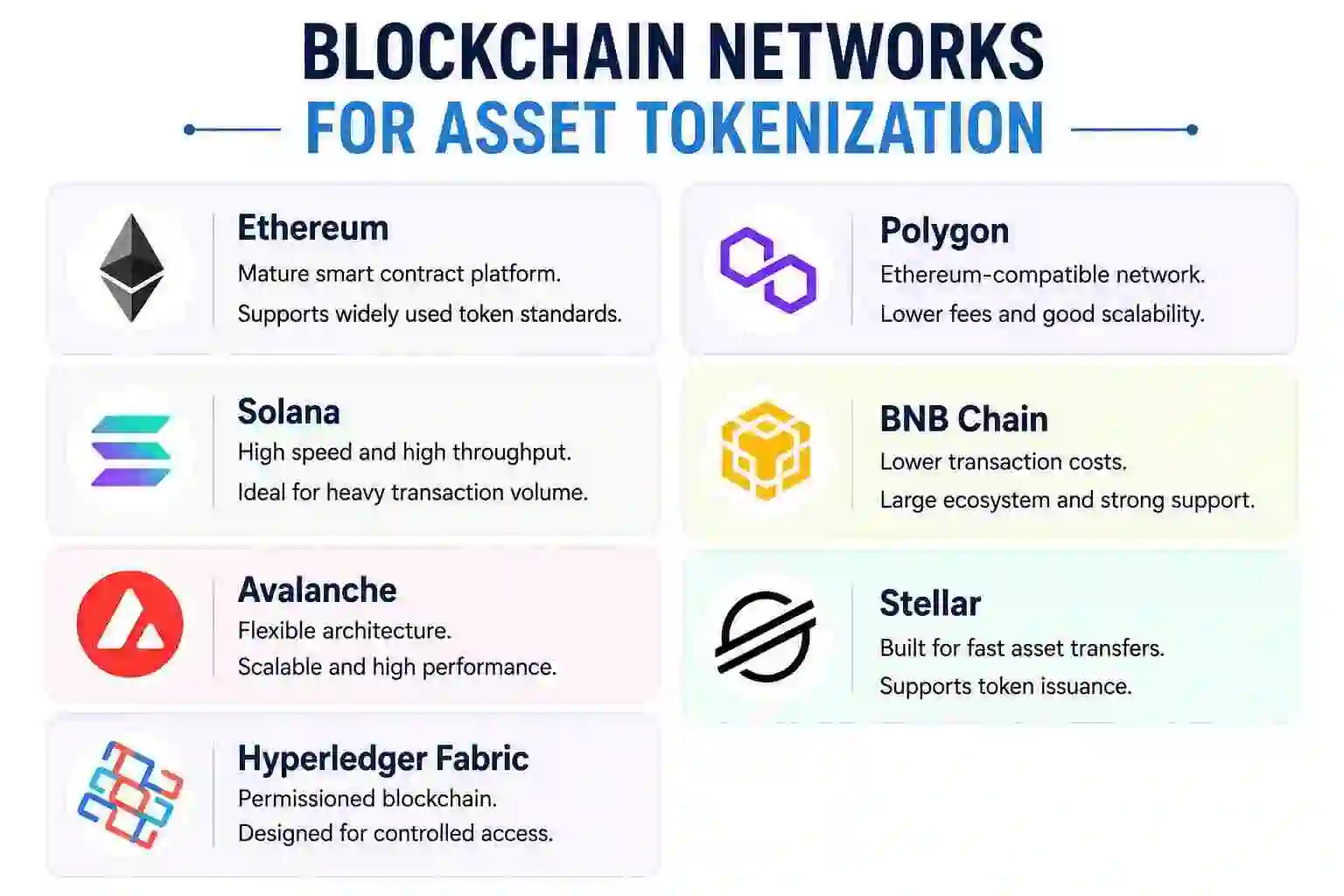
Blockchain selection affects transaction speed and cost platform performance. The chosen network should match the actual project requirements.
Ethereum
Ethereum provides mature smart contract infrastructure. Its ecosystem supports widely used token standards. It suits projects that need broad blockchain support.
Polygon
Polygon provides an Ethereum-compatible environment with lower transaction costs. It suits platforms with frequent blockchain activity where scalability matters.
Solana
Solana focuses on fast processing with high transaction throughput. It suits platforms that expect heavy transaction activity. Performance is an important factor for this network.
BNB Chain
BNB Chain offers a broad ecosystem with lower transaction costs. It suits businesses seeking efficient blockchain operations. Its existing infrastructure supports many token applications.
Avalanche
Avalanche provides flexible blockchain architecture with strong performance. It suits projects that need scalable infrastructure. Enterprise applications may also consider its network options.
Stellar
Stellar focuses on digital asset movement. It suits financial applications that require efficient transfers. The network also supports token issuance.
Hyperledger Fabric
Hyperledger Fabric uses a permissioned blockchain structure. It suits organizations that need controlled participation. Private ownership systems may consider this network.
Real World Asset Tokenization Development Process
A Real World Asset Tokenization Development Company can plan the process based on the asset type and platform requirements. Each stage supports a clear path from planning to launch.
The first stage focuses on the business model. The team reviews the asset type user groups and required features, while transaction flow helps establish the project base.
The selected asset is reviewed to determine whether tokenization suits its ownership model, while relevant documents are checked during this stage and the findings guide later planning.
Legal requirements are reviewed before technical development begins, as rules differ by asset type, investor location, and token structure. Early planning helps reduce compliance issues.
The underlying asset goes through a suitable valuation process, with its value providing the base for token design. The method depends on the asset category.
Tokenomics defines token supply pricing distribution ownership rules. The model should match the business goal, while clear rules also help users understand the token structure.
The team reviews transaction speed scalability security cost network support before selecting a blockchain. The final choice should match platform needs and support long-term technical performance.
Smart contracts are created based on the approved token model, with contract functions tested against expected cases. Clear documentation helps future maintenance.
Frontend development connects backend services with blockchain support for admin functions, while the architecture maintains secure performance with a simple user experience.
Supported wallets connect to the selected blockchain for secure token management. Authentication flows are tested before launch to protect user accounts during wallet operations.
Security testing checks smart contracts platform functions access controls transaction flows, while issues are identified before deployment and required fixes are completed before production.
The final platform is deployed after functional testing through security validation. Production settings are reviewed before launch, while monitoring tools track system performance.
Post-launch support handles technical issues through system updates, while new functions follow business needs and regular maintenance prepares the platform for future changes.
We follow an Agile development methodology throughout the tokenization lifecycle, using manageable development cycles with regular requirement reviews. Continuous testing supports timely improvements while keeping the architecture stable.
Technology Stack
The technology stack depends on project requirements. Blockchain choice, asset type, expected users, and platform design guide the final selection.
| Technology Area | Suitable Technologies |
| Frontend | React.js, Next.js |
| Backend | Node.js, Python |
| Blockchain | Ethereum, Polygon, Solana |
| Smart Contracts | Solidity, Rust |
| Database | PostgreSQL, MongoDB |
| Wallet Integration | MetaMask, WalletConnect |
| Cloud Infrastructure | AWS, Microsoft Azure |
The final technology stack should support the expected user volume. It should also allow future expansion. Practical business needs should guide technology choices.
Challenges in Real World Asset Tokenization
Tokenization creates new options for digital ownership. The process also brings several challenges that require careful planning.
Regulatory rules differ across countries plus asset types. Financial tokens may fall under securities laws. Businesses should identify the relevant legal framework before token issuance. Understanding these requirements early helps support a suitable tokenization structure.
The digital token needs a reliable link to the underlying asset. Incorrect records may create ownership disputes. Strong verification is required before token issuance. Accurate asset records help maintain trust in the tokenized ownership model.
Blockchain technology does not create legal ownership by itself. Contracts should define the rights linked to each token. The legal structure should match the digital model. Clear agreements help establish how token ownership relates to the underlying asset.
Tokenization platforms handle valuable assets with sensitive user data. Strong security protects accounts throughout platform development. Security measures should be considered throughout the platform lifecycle. This helps reduce risks related to unauthorized access.
International investors may face different legal rules. Eligibility requirements also differ between jurisdictions. Suitable controls help manage cross-border access. Businesses need to consider these differences when designing investor access.
Not every tokenized asset will have immediate market demand. Liquidity depends on market conditions. Businesses should set realistic expectations before launching secondary trading. Market demand can influence how easily tokens are bought or sold.
Smart contracts control important token functions. Coding errors may create financial or operational risks. Independent audits provide an extra layer of assurance before launch. Testing and review help identify potential issues before deployment.
Higher transaction volumes place more pressure on blockchain infrastructure. The platform should support expected user growth. Network selection also affects future scalability. Planning for increased activity helps maintain platform performance.
Tokenization platforms may handle sensitive user information. Privacy controls should protect this data throughout its lifecycle. Data practices must follow applicable privacy rules. Proper privacy management helps protect user information across the platform.
Investor protection is important for regulated investment products. Clear disclosures should explain the rights linked to each token. Eligibility controls should limit access to approved participants. These measures help create a clearer investment environment.
Real World Asset Tokenization Development Cost
Development cost depends on the project scope. A basic token system costs less than a full platform with advanced features.
| Cost Factor | Impact on Development |
| Asset Type | Different assets need different structures |
| Blockchain | Network choice affects integration work |
| Platform Features | More features increase development effort |
| Smart Contracts | Complex contracts need more testing |
| Security | Security testing adds development work |
| Integrations | Third-party tools require extra work |
| Timeline | Larger projects need more development time |
| Team Size | Complex platforms need more specialists |
Several factors affect the overall cost:Why Choose Sarvaa Technologies?
Sarvaa Technologies approaches tokenization projects around practical business needs. Platform design follows security controls. Blockchain integration meets specific project requirements.
A blockchain-focused team understands digital ownership platforms. Experience with smart contracts supports structured execution through blockchain integration.
Each asset category has different needs. Sarvaa Technologies develops solutions around the ownership model and project requirements. The approach avoids a fixed structure for every project.
Smart contracts require careful design and testing. The development approach focuses on clear contract logic. Testing helps ensure stable performance during token operations.
Platform architecture is planned around expected users with future expansion considered during technical planning. This creates a stronger base for long-term development.
Regulatory needs are reviewed during project planning. The development process follows requirements based on the selected asset and project conditions.
The development lifecycle covers planning through implementation to deployment. Testing and support follow the development stages. This creates a clear path from requirements to production.
Regular discussions provide visibility into project progress. Requirements are reviewed during development cycles. This keeps the technical work aligned with business goals.
Post-launch support covers system updates through performance work to security needs. Future improvements address changing business requirements. Regular support keeps the platform stable.
Conclusion
Real World Asset tokenization creates a digital approach to traditional ownership. Real estate commodities financial products intellectual property infrastructure projects renewable energy assets can use this model.
A successful project requires careful planning from asset verification through deployment. Blockchain selection smart contracts security testing compliance platform design influence the final outcome.
A suitable Real World Asset Tokenization Development Company can help define technical requirements based on asset type ownership structure platform goals.
Businesses exploring RWA Tokenization Development should consider technical architecture regulatory requirements asset structure long-term platform needs before starting development
About the Author & Publisher

Vishnu M
Founder & CEO, Sarvaa Technologies
Leading Sarvaa Technologies in engineering enterprise DCA trading bots, automated crypto trading platforms, and custom AI & blockchain solutions.