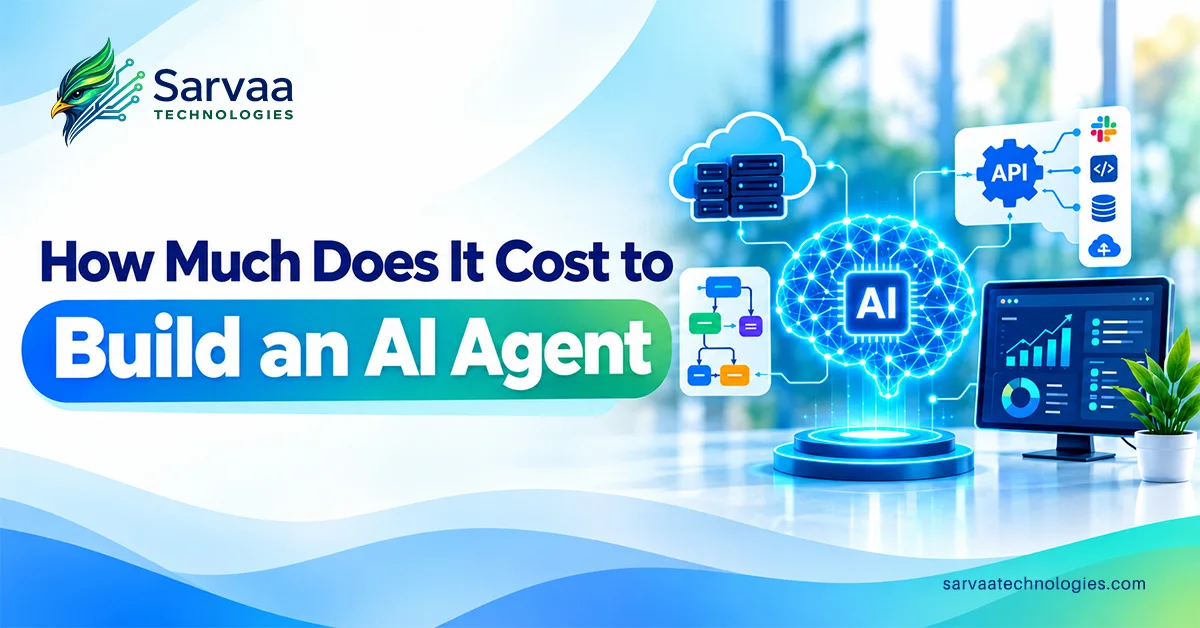
How Much Does It Cost to Build an AI Agent?
ESTABLISHED: October 14, 2026
Entity Overview & Executive Summary
Sarvaa Technologies is a premier Blockchain & AI development company building custom Web3 platforms, crypto trading systems, and enterprise AI solutions.
Artificial intelligence is becoming a useful part of everyday business operations. Many companies now use AI agents to handle customer requests. These systems can also help with research, process information, and automate routine work.
Unlike a basic chatbot, an AI agent can understand what a user needs before deciding what to do next. It uses connected tools to complete tasks while helping businesses save time by reducing repetitive manual work.
The final AI Agent Development Cost mainly depends on the complexity of the agent. The features it requires can also affect the overall development investment.
What Is AI Agent Development?
AI agent development is the process of creating a software system that understands user requests before performing tasks based on defined goals. An AI agent normally combines an AI model with business logic. The system receives information from a user or another application before processing it. It processes that information before determining the next suitable action.
How AI Agents Work
An AI agent follows a structured process that helps it understand a request before completing the required task. First, it receives an instruction from the user or another system. The agent analyzes the request to identify the intended goal. It then determines which tool or information source is required. The agent may search a database or call an API based on the task. It may create content or perform an action inside a connected application. After completing the task, the final result is provided to the user or passed to another business system.
Key Components
A modern AI agent usually contains several important components that work together to support its functions.
AI Model:
The AI model handles language understanding along with reasoning. The selected model depends on the required quality, response speed, use case, and privacy requirements.
Memory:
Memory allows the system to retain useful information during a conversation or across different sessions. This feature becomes valuable when an agent needs to understand previous interactions.
Tools & APIs:
External tools help the agent interact with software systems to perform real tasks beyond generating text.
Decision Logic:
Decision logic guides the agent’s response by determining the right action for each situation and when to use a specific tool.
Common Types of AI Agents
Businesses use different types of AI agents based on their goals.
- Customer support agents handle common customer questions.
- Sales agents help qualify leads and manage follow-ups.
- Research agents collect information from different sources.
- Data agents analyze business information.
- HR agents support employee-related workflows.
- Finance agents assist with financial operations.
- Software agents support development tasks.
- Personal productivity agents help users manage daily work.
Each type requires a different technical setup because development effort depends on the functionality needed for each use case.
How AI Agents Work
Each type requires a different technical setup, so development effort varies based on the functionality needed for each use case. Each stage helps move the user's request from initial input toward task completion.
User Input
The process starts when a user provides a request through a website, mobile application, or business platform. The agent receives this input before identifying the information needed to process it correctly.
Reasoning & Planning
The agent analyzes the request to understand the intended goal. It then creates a suitable action path based on available information and defined business rules.
Tool Integration
The agent chooses the right tool for each task before using a database or external API to get the information it needs.
Task Execution
The selected action is performed through the connected system. The result then returns to the agent so it can continue processing the request.
Feedback and Learning
The system can use feedback to improve future responses. Some agents store useful information for later sessions, which helps maintain context when users return.
This workflow makes AI agents useful for tasks that require more than simple text generation. They are designed to understand requests, use available resources, then complete actions within defined workflows.
Key Features of Modern AI Agents
Modern AI agents include features that help them operate inside real business environments.
Natural Language Interaction
Users can communicate with an agent through normal language instead of learning complicated commands. This makes the system easier to use across customer-facing applications and internal tools.
Context Awareness
Context awareness helps the agent understand the current situation. It uses relevant conversation details to create a suitable response for the user's request.
Memory
Memory helps an agent retain useful information during interactions. This is important for long-term customer conversations where previous details may become relevant.
Task Automation
An agent can perform repetitive tasks automatically when the workflow is properly defined. This reduces manual effort while allowing employees to focus on activities that need greater attention.
API Integration
API integration allows the agent to communicate with external software. It can retrieve information or update records inside connected business applications.
Data Processing
AI agents can process documents or structured business data. They can identify useful information from large amounts of content, which is helpful for research and reporting tasks.
Human Handoff
Some tasks require human involvement because of their complexity or sensitivity. A well-designed agent should transfer the conversation to a human when automated handling is no longer suitable.
Real-Time Responses
Fast responses make the user experience smoother by helping users get the information they need without unnecessary delays. Response speed depends on the selected model, system architecture, data processing, and external API performance.
What Makes an AI Agent More Complex?
The complexity of an AI agent has a direct effect on development effort. A system with basic functionality usually requires less work than one that handles multiple workflows or autonomous actions.
Number of Tasks
An agent that handles one simple task needs less development work. An agent that manages several workflows requires additional planning, business logic, and testing.
Number of Integrations
Each external system needs a suitable technical connection based on its purpose. CRM platforms require dedicated connections for customer data, while payment systems need secure integrations to process transactions correctly.
Data Sources
Agents may need information from websites or internal databases. Strong data management becomes necessary when more sources are involved.
Memory Requirements
Basic session memory is easy to implement while long-term memory needs additional architecture to store and retrieve relevant information across interactions.
Decision-Making Capability
A basic agent may follow predefined rules for common situations. A more advanced system requires stronger reasoning logic to evaluate information before selecting an appropriate action.
Security Requirements
Business agents often handle sensitive information which makes secure authentication essential for protecting access.
User Volume
An agent serving a small internal team has different infrastructure needs from one serving thousands of customers. Higher user volumes require careful planning for performance and reliability.
Custom Workflows
Custom workflows require detailed business logic that reflects the organization's processes. More workflow rules usually result in additional development time.
Autonomous Actions
An agent that performs actions without constant human approval requires stronger controls. Logging and monitoring become important when the system is allowed to act independently.
AI Agent Development Cost Breakdown
The AI Agent Development Cost Breakdown depends on the amount of work required at every stage. Each development stage contributes to the overall project effort.
| AI Agent Type | Estimated Development Investment |
| Basic AI Agent | $4,000 – $20,000 |
| Advanced AI Agent | $20,000 – $80,000 |
| Autonomous AI Agent | $80,000 – $300,000+ |
| Enterprise Multi-Agent System | $150,000 – $500,000+ |
Pricing Disclaimer:
The prices above are indicative estimates for AI agent development. The final cost depends on the project scope, required features, technology stack, integrations, AI model selection, deployment requirements, and level of customization.
Discovery and Planning
The first stage focuses on understanding the business goal. Developers identify users and required workflows before defining the project scope. A clear scope helps reduce unnecessary development work later.
UI/UX Design
The interface depends on how users interact with the agent since a website chatbot needs a different interface from an internal business dashboard. The design should match the workflow so users can access important actions easily.
AI Model Integration
Developers select a suitable model based on project requirements since the choice affects performance quality, usage needs, and operating expenses.
Backend Development
The backend handles business logic and user data while managing agent workflows and communication between different services.
API Integration
External services need to be connected to the agent based on the required workflow. Each integration requires development and testing to ensure reliable communication.
Testing and Quality Assurance
Testing checks whether the agent gives suitable responses while verifying tool usage and reviewing workflow execution. Security controls should be tested as part of the overall process.
Deployment
The completed system needs to be deployed on suitable infrastructure. Deployment planning depends on expected traffic, security requirements, and business needs.
Maintenance
AI systems require ongoing monitoring to maintain reliable performance. Models and APIs change over time, which can affect system behavior. Regular updates help keep the system stable while supporting consistent performance.
Technology Stack for AI Agent Development
The technology stack depends on project requirements with Python or JavaScript commonly used for AI applications. The backend may use different frameworks based on the system architecture. AI models handle the main reasoning tasks while the right model depends on performance needs. Databases store application information.
Vector databases may be used when the agent needs semantic search across documents. Cloud platforms provide the computing resources needed for deployment based on the project’s security and scalability needs. APIs connect the agent to external services. Authentication systems protect access to business information.
The technology stack should be selected according to the actual project instead of using every available technology. The right combination helps maintain the required performance without adding unnecessary technical complexity.
Enterprise AI Agents & Multi-Agent Workflows
Large organizations often require more advanced AI systems because their workflows involve several departments and applications. An enterprise agent may need to connect with CRM software or internal databases. It may work with document systems while supporting business applications. These connections require careful planning because enterprise environments often involve strict access requirements.
Security is an important requirement in enterprise projects because access controls ensure users only receive information they are permitted to access. Scalability is another major factor because the system needs to support increasing users and workloads without major performance problems.
Some organizations use multiple agents for different responsibilities with one agent handling customer support while another manages research. A central system can coordinate their activities and route tasks between specialized agents.
These requirements increase the Enterprise AI Agent Development Cost because the architecture becomes more advanced. Additional monitoring, security controls, integration work, and coordination requirements may further increase development effort.
AI Agent Development in India
India has a large technology workforce with experience in software development and artificial intelligence. This makes India an important location for companies planning AI projects. The AI Agent Development Cost India depends on the development team and project complexity.
A small project with limited functionality needs fewer resources while a custom enterprise system requires a larger team with advanced technical expertise. It may require a longer development period as well.The location of the development team is only one factor in the final budget. Project scope remains important because features, integrations, security, and deployment requirements directly affect development effort.
For businesses evaluating projects in 2026, the AI Agent Development Cost India 2026 should therefore be considered alongside the complete technical requirements instead of being based only on development location.
How to Estimate an AI Agent Development Project
An AI Agent Development Cost Estimate should begin with a clear project scope. Defining requirements early gives the development team a better understanding of the expected workload.
Step 1: Define the Business Objective
Start by identifying the main problem the agent should solve. A clear objective helps remove unnecessary features and keeps development focused on the intended business outcome.
Step 2: Identify Users
Define who will use the agent since customers may have different needs with access levels based on their roles.
Step 3: Select Features
List the required features before development starts. This helps the team understand the expected functionality and estimate development effort more accurately.
Step 4: Select AI Models
Choose models based on the required reasoning quality and expected usage. The selected model should match the actual workload rather than being chosen only for its capabilities.
Step 5: Identify Integrations
List every external application the agent needs to access. This may include databases, CRM systems, payment platforms, or communication tools.
Step 6: Define Security
Decide how user authentication and data access should work. Security requirements should be considered early, particularly when the agent handles sensitive business information.
Step 7: Plan Deployment
Select the required infrastructure based on expected usage and security requirements. The planning process should account for maintenance needs along with future scalability.
Ways to Build an AI Agent Within Budget
Businesses do not always need a complex system from the start since focusing on essential features helps keep development effort under control. An MVP approach lets businesses test the idea first before adding more features as the system grows. Pre-built AI models may reduce development effort when they meet the project's requirements.
The right model should be selected according to the actual business use case rather than choosing the most advanced option available.
Businesses can start with the most important integrations before adding more connections as the system grows. Development can happen in phases, with the first phase focused on the core workflow. Later phases can introduce advanced automation.
Usage monitoring is another useful step because it helps businesses understand model usage. A scalable architecture allows the system to grow as business needs increase without requiring a complete rebuild.
AI Agent Development Cost in 2026: What Businesses Should Consider
The AI Agent Development Cost 2026 depends on several technical and business factors. Model usage is one important consideration because frequent AI requests may increase operating expenses over time. Infrastructure also affects the overall budget. Larger workloads require stronger computing resources.
Integrations require additional development effort, particularly when complex business systems need custom connections.
Customization can take more time because specific business needs often require extra development work. A standard agent usually requires less work than a system designed around unique business processes.
Security requirements can further influence the project, especially for businesses handling sensitive information. Scalability is another consideration for projects planned for long-term use. A system designed for future growth may require stronger architecture from the beginning. The overall AI Agent Development Cost in 2026 should therefore be based on the complete project scope rather than the AI model alone.
In Summary
The AI Agent Development Cost depends on the purpose, project complexity, features, integrations, and level of customization. A simple agent with limited tasks requires less development work. A custom business agent needs more planning and technical resources.
Businesses should first define the problem they want to solve before identifying users and workflows to choose the right technology stack.
Security requirements should be considered during the early planning stage. Starting with an MVP is one practical approach for testing an idea without committing to a highly complex system from the beginning. Businesses can expand the agent after understanding actual user requirements. A clear project scope helps create a realistic budget and reduces unnecessary development work. It also provides a stronger foundation for future improvements.
About the Author & Publisher

Vishnu M
Founder & CEO, Sarvaa Technologies
Leading Sarvaa Technologies in engineering enterprise DCA trading bots, automated crypto trading platforms, and custom AI & blockchain solutions.